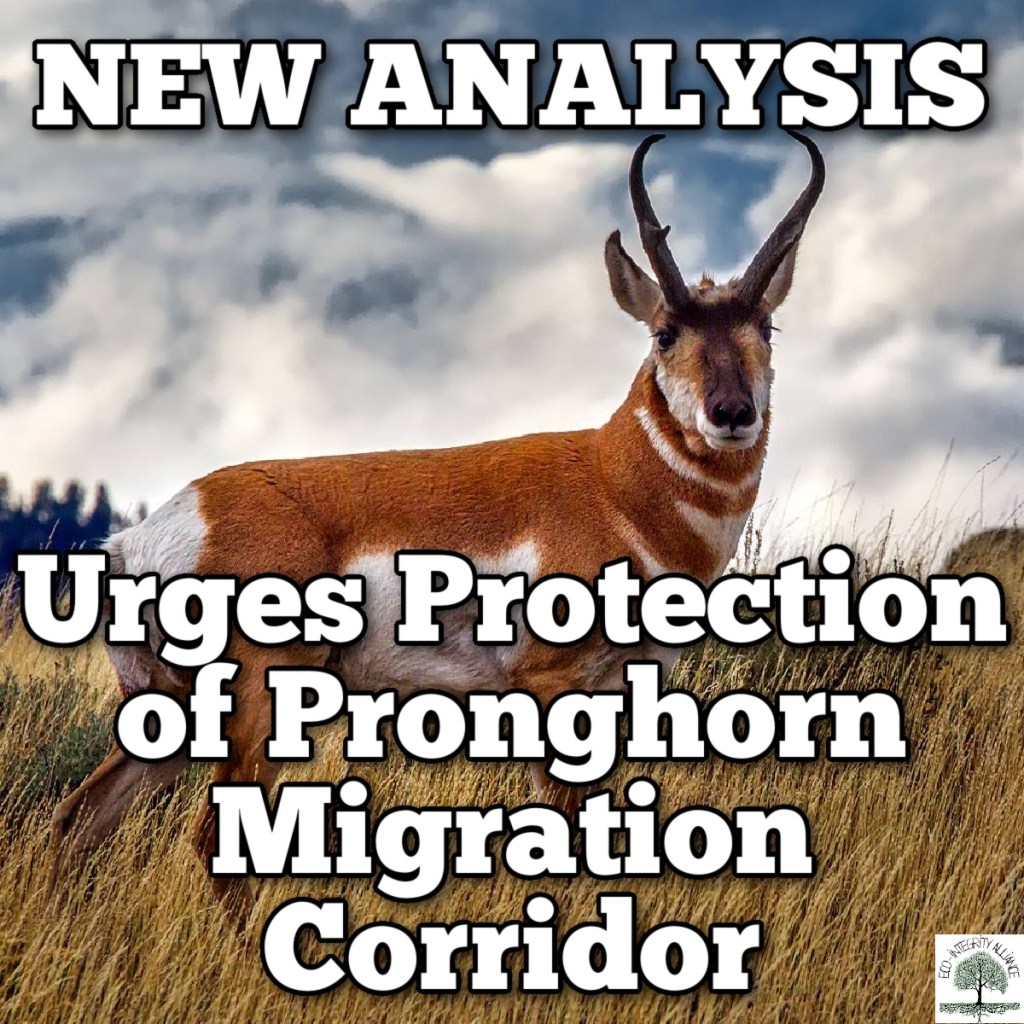
A new report, Sublette Antelope Migration Corridor: Land Use Analysis with Recommendations, highlights the urgent need to protect one of North America’s most significant wildlife migration routes. Authored by Dr. John Carter, the analysis underscores the ecological, cultural, and economic importance of the Sublette pronghorn migration corridor within the Greater Yellowstone Ecosystem.
The report finds that while most of the corridor lies on public land, privately owned agricultural lands play a critical role in maintaining migration connectivity. Increasing residential development, fencing, and habitat fragmentation pose growing threats to corridor functionality. At the same time, Wyoming residents strongly support conservation, with a majority favoring protection of wildlife habitat over expanded development.
Economic data show that wildlife, recreation, and agriculture together contribute billions annually to Wyoming’s economy, reinforcing the importance of preserving open space and working lands.
The report recommends strengthening county zoning regulations, requiring environmental analysis for development, and prioritizing protection of the medium-use corridor, which encompasses the most critical migration areas.
“Protecting this corridor is essential to sustaining Wyoming’s ecological heritage, agricultural base, and long-term economic vitality,” Carter said.

