Evidence in a study funded by U.S. Forest Service, and co-authored by Colorado Forest Restoration Institute and the Colorado Field Office for The Nature Conservancy, shows that 122 acres of public forest outside Nederland “thinned” in 2015 in the name of “wildfire fuel reduction” burned at “high severity” during the 2016 Cold Springs Fire, destroying five homes, while the unlogged forest feet away didn’t burn at all.
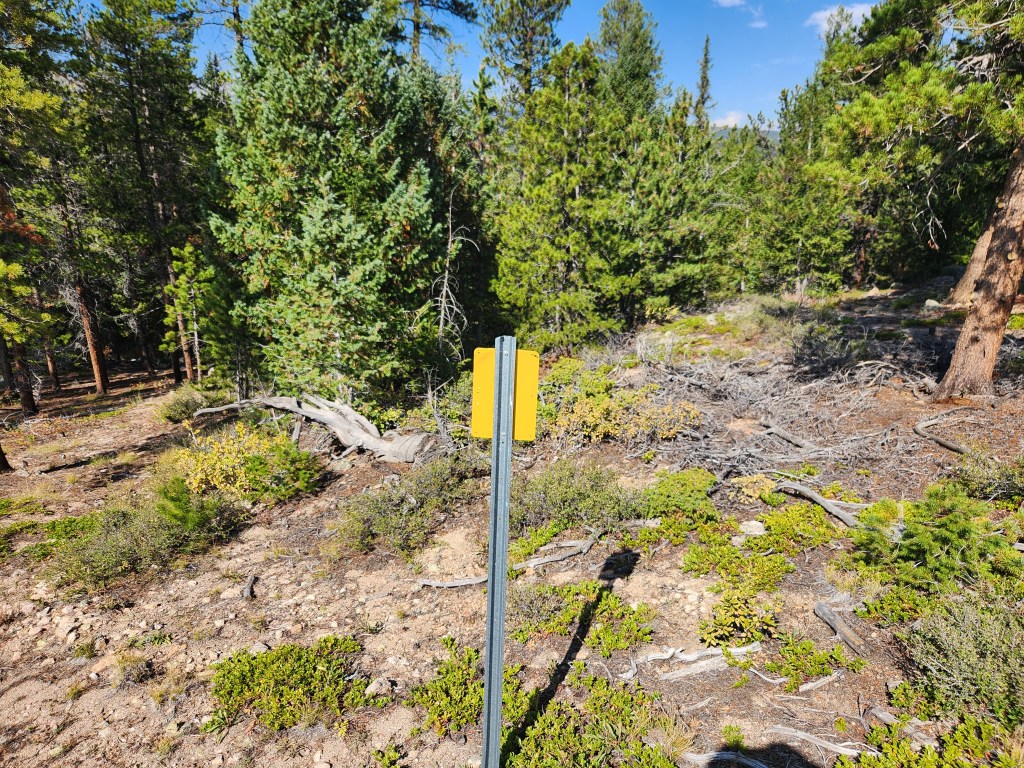
Videos and photos taken in October within the Cold Springs Fire area in the Boulder Ranger District of Roosevelt National Forest show a sparsely treed landscape with blackened stumps directly behind a U.S. Forest Service sign, which, despite Forest Service replanting in 2018, has still not recovered. Meanwhile, the adjacent unlogged forest on private land, remains lush, green, and completely intact.

Yet study authors neglected to mention how the replant unit was the exact same area previously “thinned” by the Forest Service in 2015 in the name of “community protection” from wildfire, as shown in study’s Figure 1 and Forest Service’s “Ridge Road Unit” map (below, with text added).
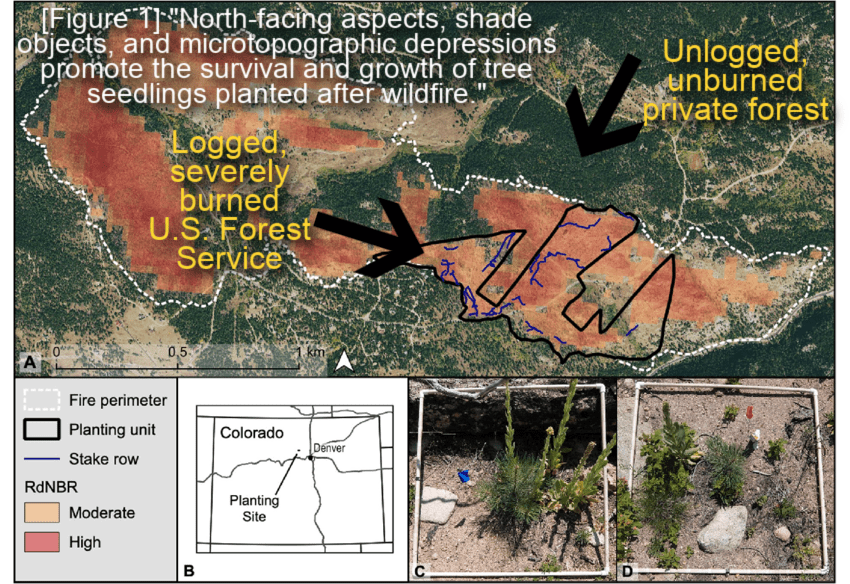
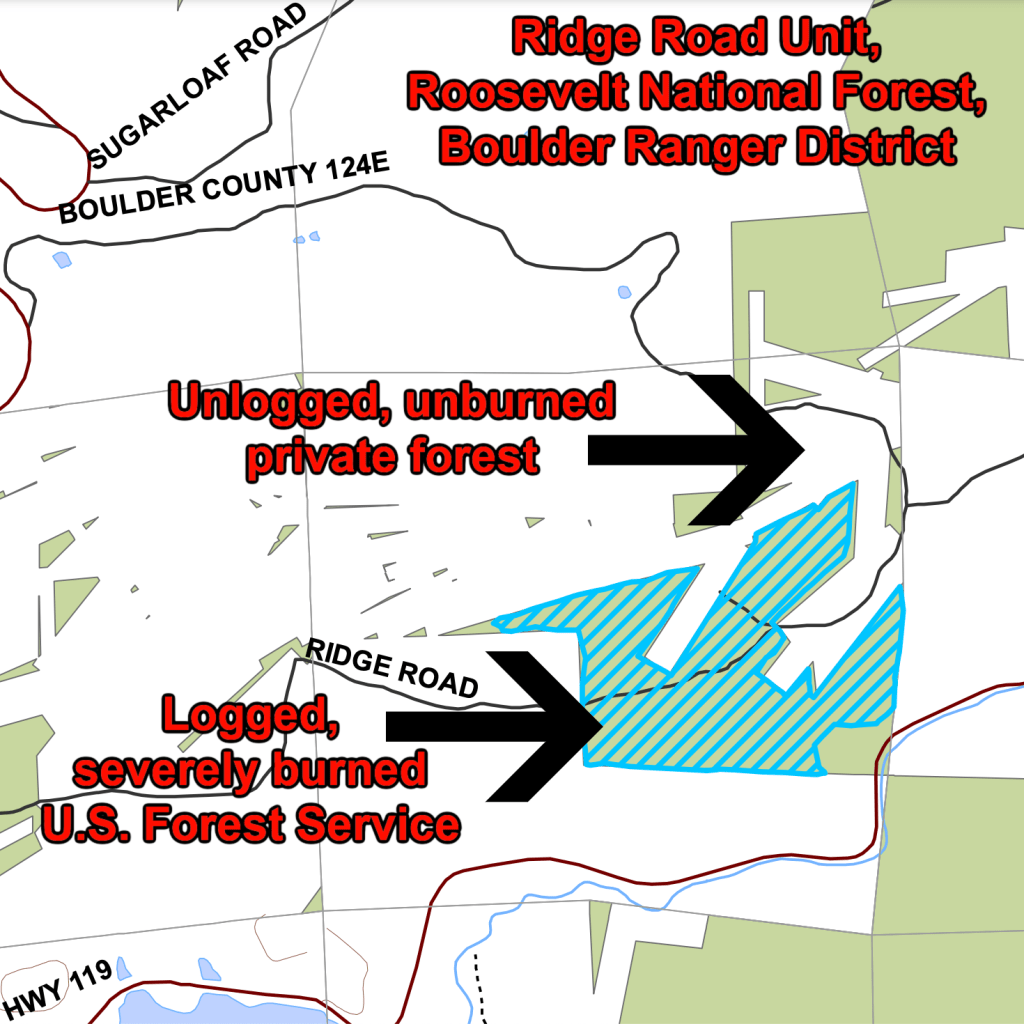
While satellite imagery of the “high severity,” previously “thinned” burn area—as well as the adjacent unlogged, unburned forest—is clearly depicted in Figure 1, authors didn’t note this anywhere in the study. U.S. Forest Service and other entities promoting and/or carrying out taxpayer-funded “wildfire fuel reduction” have a history of omitting evidence that refutes the pro-logging narrative, with a 2023 study published in the peer reviewed journal, Fire, giving several examples of the federal agency’s “falsification of the scientific record.”
Evidence from the Cold Springs fire backs that of a vast and growing body of peer reviewed studies refuting logging industry and agency assertions that “fuel reduction” protects communities from wildfire. Indeed, these independent (without financial conflicts of interest) studies show that “thinning” heats up and dries out the forest microclimate, which can make fires start easier, burn more intensely—including igniting crown fires—while opening stands that allow wind to spread flames quicker to nearby communities, potentially overwhelming firefighters.
Additionally, photos taken by Eco-Integrity Alliance one ridge to the west show a large acreage of unlogged private forest that, despite burning at high intensity in the Cold Springs fire, has regenerated with dense tree cover up to five feet tall, the abundant standing dead snags and fallen logs making it an ideal example of post-fire recovery and habitat. Meanwhile, the directly adjacent area, logged before and after the fire, has made little to no recovery.

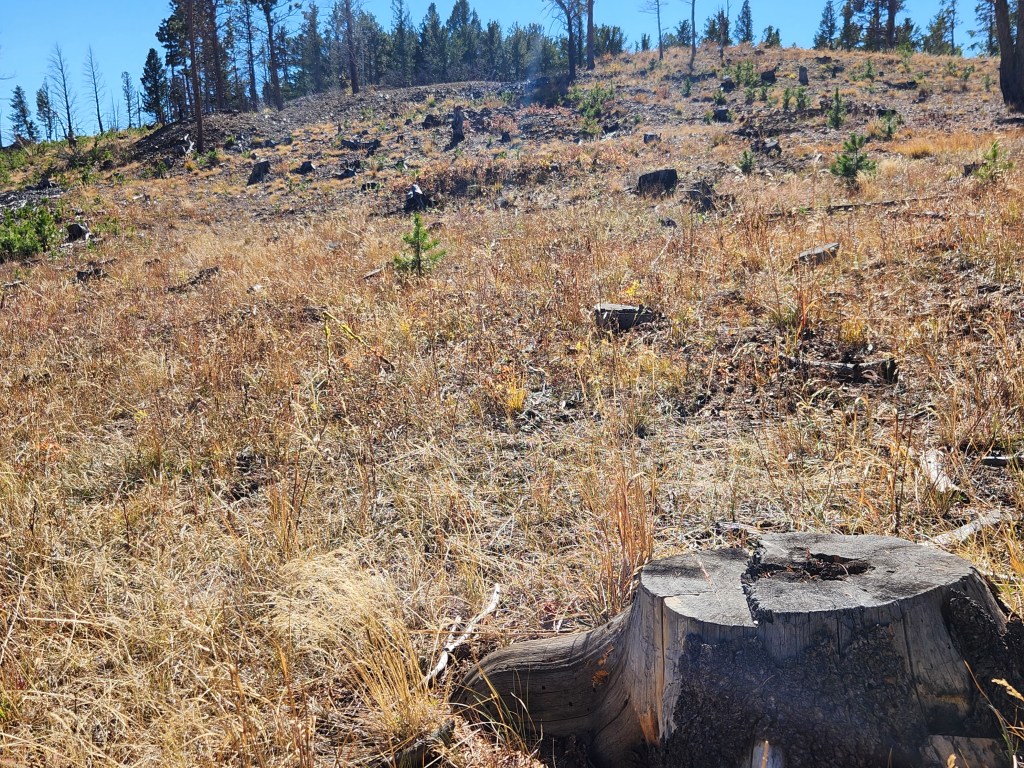
While making no mention of this section of the burn area less than ¼ mile away, the agency-funded study does acknowledge how, “shade objects, which in our study were primarily various forms of dead woody vegetation (i.e., snags, logs, and stumps) that shaded seedling roots during summer afternoons, increased the survival and growth of planted seedlings.”
Despite overwhelming evidence that “wildfire fuel reduction” not only might not protect communities and forests but can increase the danger and impacts, Boulder County and Jefferson County Open Space, Denver Mountain Parks, and U.S. Forest Service, are pushing forward millions of acres of logging along the Front Range, including the largest logging project in Colorado history, the 116,000 acre “Lower North South Vegetation Management” in the Pike-San Isabel National Forest. A total of 45 million acres in National Forests are proposed for logging across the West, with nearly 1 million acres under an “emergency action” authority which allows the agency to rush through cutting while bypassing environmental laws and public engagement.
 Eco-Integrity Alliance