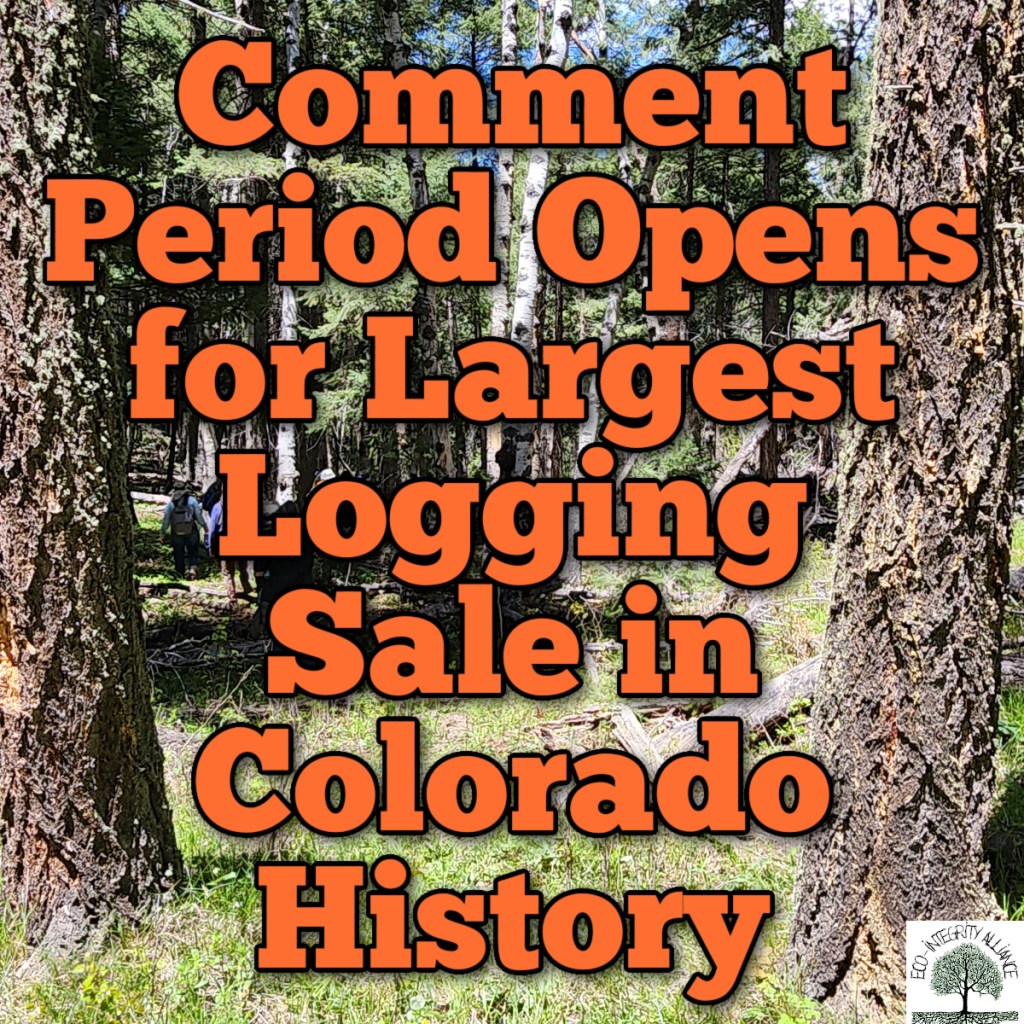
The U.S. Forest Service has opened its public comment period until December 4 for the largest logging operation in Colorado history, the “Lower North South Vegetation Management” in the Pike-San Isabel National Forest in the Front Range mountains of Jefferson and Douglas Counties.
The 116,000 acres of scientifically-contested “wildfire fuel reduction” logging includes 18,500 acres in protected Colorado Roadless Areas, with clearcuts up to 40 acres in size. Despite multiple press releases sent to every media outlet in the Front Range since February, not a single article has informed the public as to the existence of this project.
The South Platte Ranger District seeks to rush the logging through on an expedited timeframe by exploiting a controversial “emergency action” authorization invoked by U.S. Secretary of Agriculture Tom Vilsack under Section 40807 of the Infrastructure Investment and Jobs Act of 2021. This so-called “emergency” logging skirts the objection period of what’s known as the “predecisional administrative review process,” a legal challenge used by environmental advocates to pause or stop destructive projects, while bypassing alternative actions required by the National Environmental Policy Act (NEPA).
In his comments on the project, Denver-based forest management analyst, Rocky Smith, warns of “strongly adverse impacts.” Smith cautions that the logging could have “strong adverse impacts on soils, watersheds, habitat for a variety of species…and critical habitat for three species listed as threatened under ESA [Endangered Species Act].”
His comments are endorsed by the Center for Biological Diversity, Central Colorado Wilderness Coalition, Colorado Mountain Club Denver Group, EcoFlight, Environment Colorado, Rocky Mountain Wild, San Luis Valley Ecosystem Council, Western Watersheds Project, and Wild Connections. Also signing on is small organic farmer, Deanna Meyer, whose property abuts the project area and who worries the logging will make her home more vulnerable to wildfire.
Indeed, a vast and growing body of peer reviewed science refutes logging industry and agency assertions that “fuel reduction”—aside from home hardening and defensible space pruning no more than 100 feet around structures—protects communities from wildfire. To the contrary, these independent (without conflicts of interest) studies show that “thinning” heats up and dries out the forest microclimate, which can make fires start easier, burn more intensely—including igniting crown fires—while opening stands that allow wind to spread flames quicker to nearby communities, potentially overwhelming firefighters.
Smith and endorsing organizations contend that bulldozing logging roads into forests will “cause adverse changes to the landscape, from channeling soil and water delivery to streams to fragmenting wildlife habitat and facilitating undesired human use…the Pike-San Isabel National Forest already has a major problem with illegal off-route use of motor vehicles.”
The comments also caution how “soil disturbance creates areas for introduction and spread of non-native vegetation, i.e., noxious weeds,” which studies, including a recent one from CU Boulder, have shown can hasten the spread of wildfire.
Rampart East Roadless Area—one of seven Roadless Areas within the project area—is “the largest and least human-impacted area remaining in the Rampart Range, and forms both a critical core area for wildlife at the edge of the rapidly growing Interstate 25 (I-25) urban corridor,” according to an earlier analysis by the Forest Service. While the Bear Creek portion is a “near-pristine example of a Colorado front range transition zone between montane and plains ecosystem”.
The Forest Service has scheduled two public meetings during the comment period for citizens to voice concerns, virtually on November 12 and at the Elk Creek Fire Station in Conifer on November 13. However, a public uninformed about this impending logging has no opportunity to engage in the democratic process.

