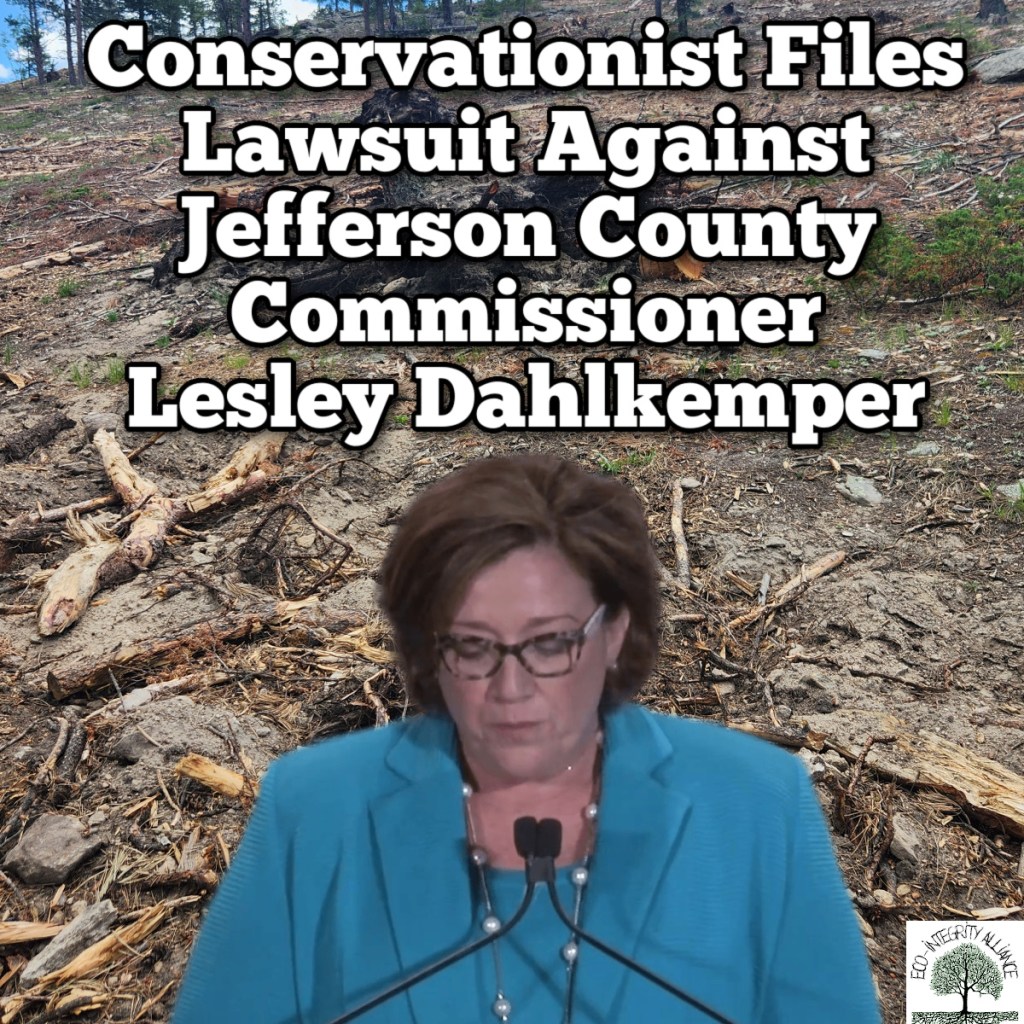
Ecosystem advocate, Josh Schlossberg, filed a civil complaint in District Court in Jefferson County, Colorado last week alleging that Jefferson County Commissioner Lesley Dahlkemper deleted and/or withheld emails requested in a Colorado Open Records Act (CORA) filing.
On episode 106 of the Green Root Podcast (the official podcast of Eco-Integrity Alliance), host Josh Schlossberg wades into an old but ongoing debate within the environmental movement about whether it’s ethical for ecosystem advocates to focus exclusively on public lands protection at the expense of “private” land extraction.
Josh talks about:
-The arbitrary yet currently legal definitions of public vs. private lands in the U.S.
-The gaps and overlaps between a “deep ecology” philosophy and on-the-ground organizing.
-Whether it’s possible for advocates to carry out practical, step-by-step, mission-based actions without compromising a wholistic vision of ecological integrity.
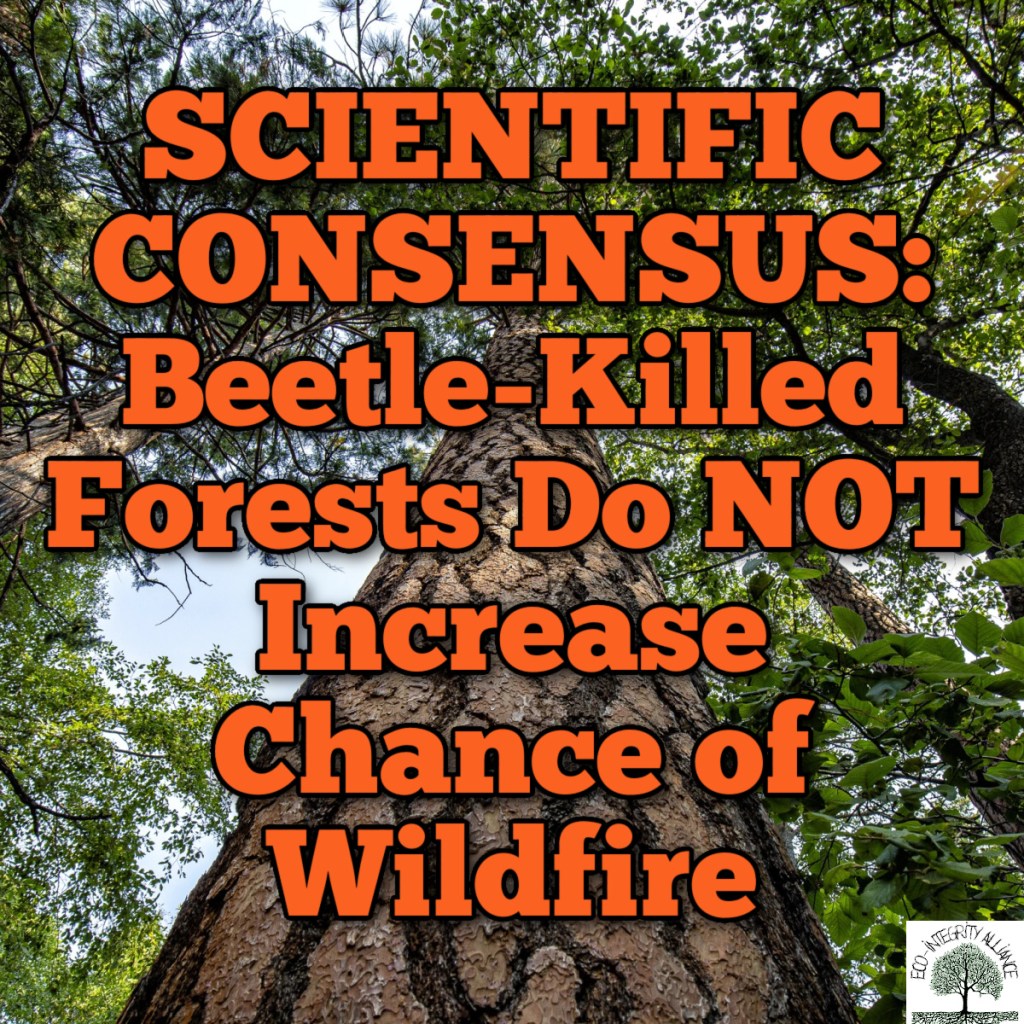
Colorado Governor Jared Polis’ and Department of Natural Resources’ recent claim that the latest natural wave of native mountain pine beetle in Front Range forests will increase wildfire threats to communities and forests has long been disproven by the consensus of peer-reviewed—and even government agency—science.
This includes conclusive studies from CU Boulder and Colorado State University scientists who emerged as some of the world’s leading experts on the interplay between beetles, forests, and wildfire after Colorado’s last mountain pine beetle wave peaked in 2010.
On episode 104 of the Green Root Podcast (the official podcast of Eco-Integrity Alliance), host Josh Schlossberg brainstorms about ways that grassroots advocacy might fix our broken chain of participatory democracy between corporations, government, media, and the public.
Josh talks about:
-Why media—the biggest broken link in the chain—should be held accountable or bypassed
-How grassroots advocacy can be reinvigorated through strong stances and clear vision
-The importance of bringing back joy to environmental organizing
Picture a childcare business with the motto, “Caring for the children and serving parents.” True to its word, it hires on a small team of talented, dedicated people who really love kids and do a great job watching over them.
Yet, there’s another, much larger side to this business kept on the downlow. The same entity tasked with looking after our little ones also employs other staff to kidnap and sell them to child trafficking rings.
Of course, this is an absurd scenario. No company with such an extreme—and obscene—conflict of interest could possibly exist, much less be considered a legitimate enterprise.
Except if you swap out “caring for the children” with “caring for the land,” and trafficking children with logging, grazing, drilling, and mining—then add in billions per year in taxpayer funding—this exact scenario perfectly describes the U.S. Forest Service’s “management” of National Forests.
Yes, the very government agency sworn to protect public lands from the depredations of industry is, at the same time, the single largest threat to these ecosystems through the federal timber sale program, livestock grazing permits, and other extraction schemes.
On episode 103 of the Green Root Podcast (the official podcast of Eco-Integrity Alliance), Hudson Kingston, legal director for CURE, battles government plans in Minnesota to greenwash dirty, forest-killing “biomass” energy by ignoring carbon emissions from incinerating trees and trash for industrial-scale electricity.
-Risks to environmental justice communities from increased air pollution.
-Devastating impacts on public lands and Native American reservations.
-How we shouldn’t be switching from one polluting, climate-busting energy source (coal) to another (“biomass”).
-How this decision could have ramifications for greenwashing forest and trash incineration in Minnesota and across the U.S.
The mission of Eco-Integrity Alliance (eco-integrityalliance.org) is to unite U.S. grassroots ecosystem advocates through common campaigns of mutual support.
On episode 102 of the Green Root Podcast (the official podcast of Eco-Integrity Alliance), we strategize with Rocky Smith, forest management consultant with over forty years’ experience, about the worst threat we’ve ever seen on public lands in the West—including the now biggest logging project in Colorado history announced last week—and one quick action you can take to start turning things around before it’s too late.
Host Josh Schlossberg talks with Rocky about:
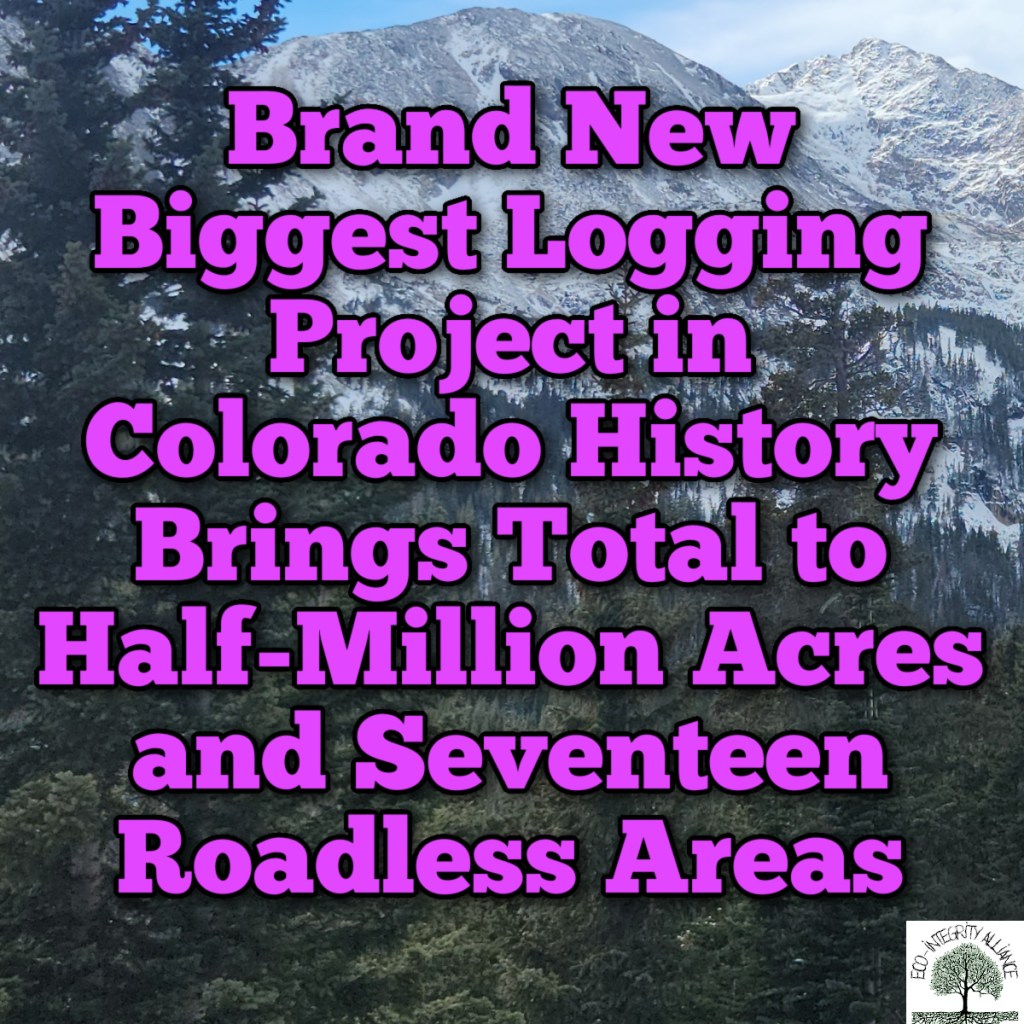
-The brand new biggest logging project in history in Colorado announced last week, bringing the total under the “Big Four”—Pike’s Peak, Lower North South, St. Vrain, Black Diamond—to a half-million acres across seventeen Roadless Areas, all under a media blackout.
-The dirty details of the “Pike’s Peak Vegetation Management,” almost 200,000 acres of industrial logging—including 13,500 acres within four protected Roadless Areas—in endangered species habitat and high-elevation bristlecone pine stands, along with a quarter-million acres of toxic herbicide spraying.
-How the U.S. Forest Service is allowing the public only two weeks to comment on the project over the holiday season (again, with zero media coverage).
-The fake “emergency” behind it all declared by the Trump Administration and U.S. Forest Service to rush 112 million acres—59 percent of National Forests—onto the chopping block.
-Rocky’s take on the root of the ecological crisis.
This week, the U.S. Forest Service proposed what is now the largest public land logging scheme of the century (and possibly history) in Colorado, “Pike’s Peak Vegetation Management,”194,567 acres of industrial logging—13,500 acres within four protected Roadless Areas—and 244,210 acres of toxic herbicide spraying in the Pike and San Isabel National Forests in El Paso, Teller, and Douglas Counties.
The federal land management agency appears to have been emboldened by a multi-year media blackout across all of Colorado on what, up to this point, were successively the three largest logging projects in state history, to propose a fourth, even larger and more destructive one with the public kept almost completely in the dark.
“The Forest Service is proposing a huge project that will likely have detrimental impacts on important resources, including four Roadless Areas and three wildlife species listed as threatened under the Endangered Species Act,” says Denver-based forest management consultant Rocky Smith, building on his more than forty years’ experience. “They provide only general information on which to respond to the proposal and give us only fourteen days to do so. This is not the way to manage the public’s forests.”
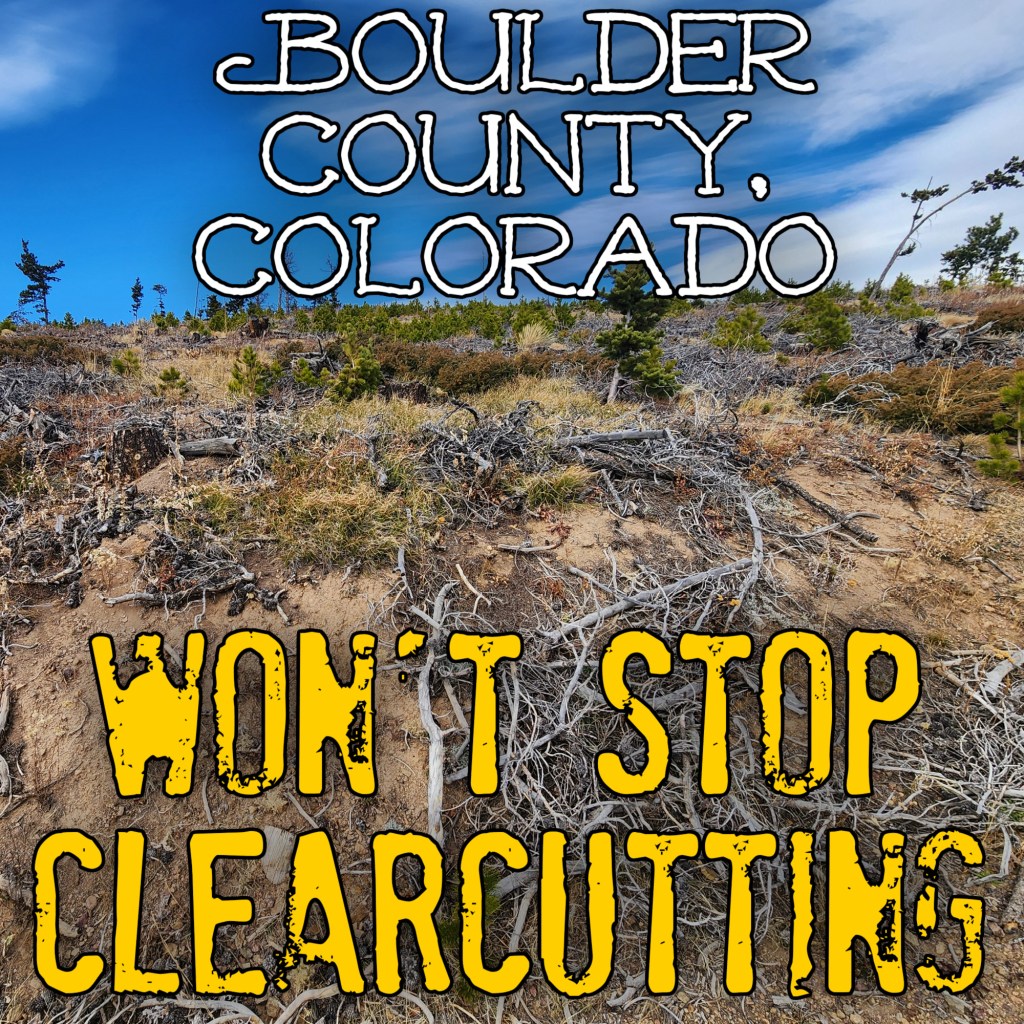
Boulder County, Colorado—where 79% of the electorate voted for Kamala Harris in 2024—continues to almost completely ignore the overwhelming body of science and warnings from the conservation community as to the lack of efficacy, the ecological harm, and the increased danger of spreading fire to communities from its rampant and indiscriminate “fuel reduction” logging across Open Space Parks.
(Yes, pretty much all so-called “fuel reduction” meets the dictionary definition of logging, i.e. “to cut trees into logs”; contractors hired to do the jobs are “logging contractors”; even U.S. Forest Service project maps clearly label this as “logging.”)
On episode 101 of the Green Root Podcast—the official podcast of Eco-Integrity Alliance—host and former investigative journalist Josh Schlossberg tries to make sense of whether most media outlets are unable or unwilling to accurately and honestly cover environmental topics.
Josh talks about:
-The ideological and partisan bias he uncovered while working as an award-winning environmental journalist
-His experience as an ecosystem advocate interfacing with media only for them to cover up, misreport, or spread disinformation about ecological topics
-Whether bad environmental reporting is the result of an inability or refusal of journalists to do their jobs
-If it’s possible to hold media accountable to a basic standard of journalistic ethics
-How it’s past time to create new media that accurately reports on environmental issues while exposing the propaganda of legacy and “alternative” outlets

 Eco-Integrity Alliance
