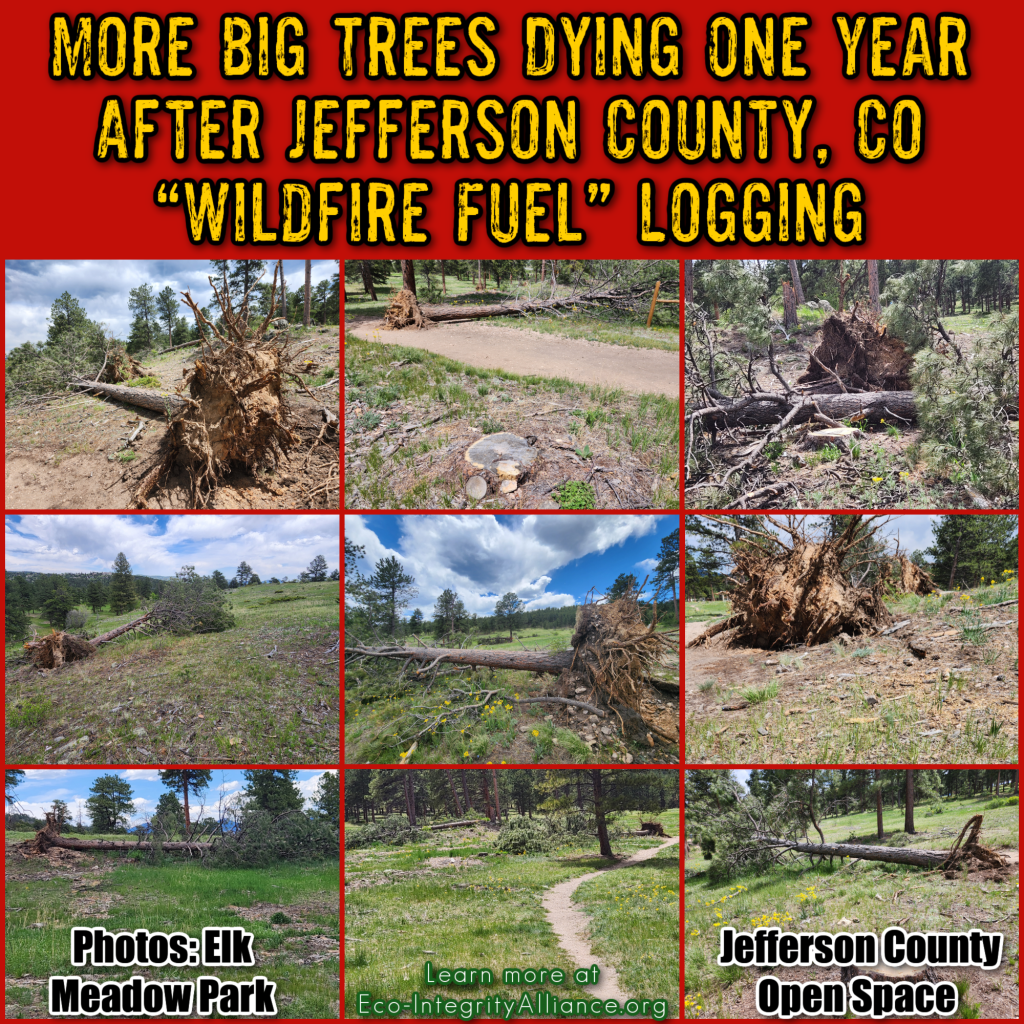
One year after Jefferson County Open Space cut hundreds of fire-resistant mature and old growth trees up to 129 years of age in Elk Meadow Park in Evergreen, Colorado under the scientifically-challenged premise of “wildfire fuel reduction,” dozens more trees are dying as a result of the logging.
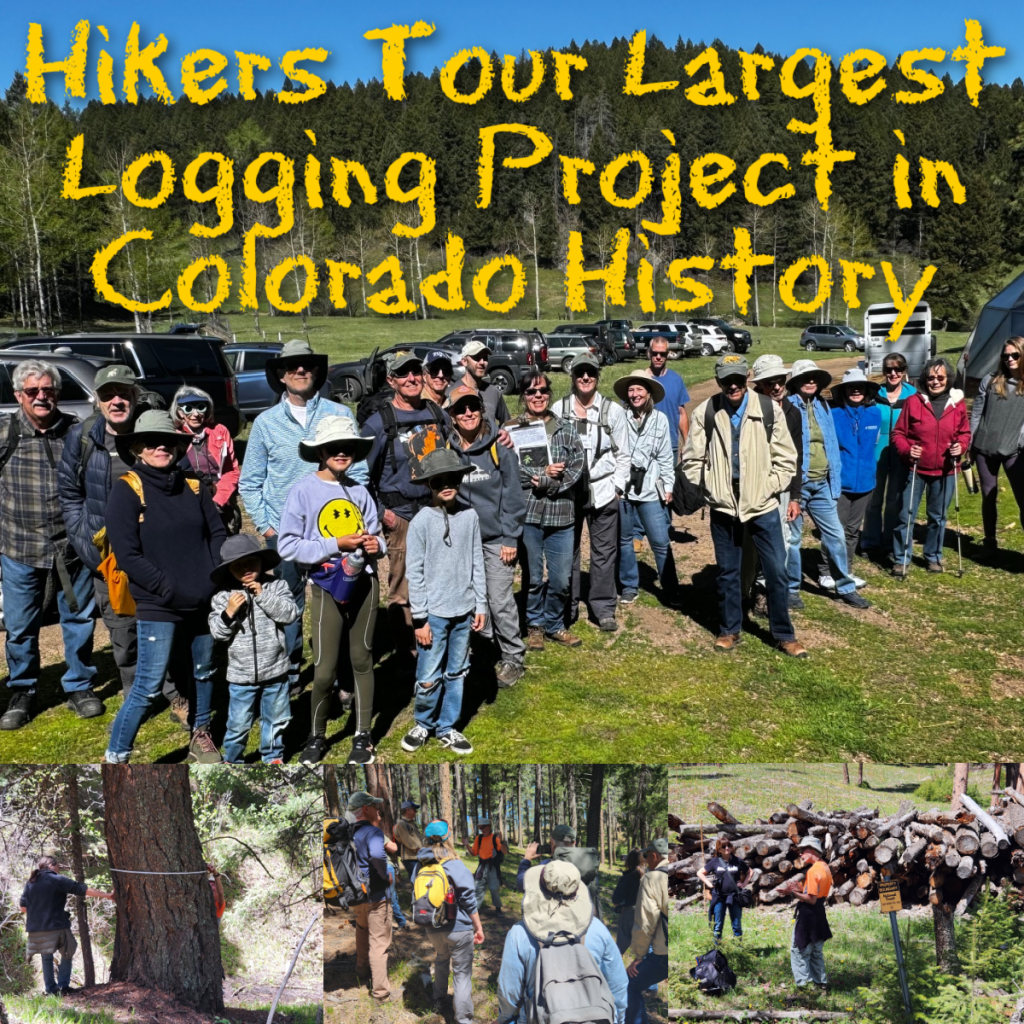
On May 26 Eco-Integrity Alliance hosted a guided hike for over thirty people (photo shows most, though not all attendees) through a section of the Pike National Forest outside Sedalia threatened by 116,600 acres of scientifically-contested “wildfire fuel reduction” logging, the largest logging project in Colorado history.
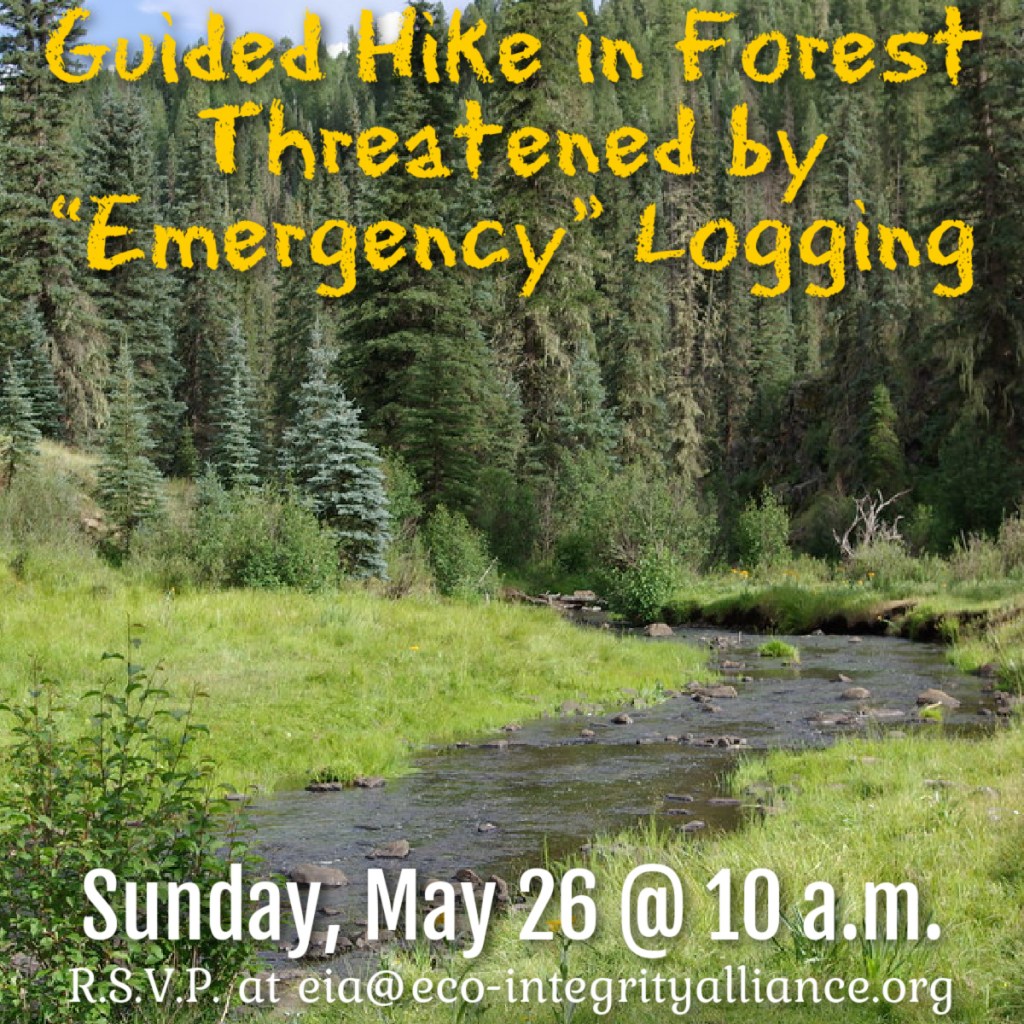
On Sunday, May 26 at 10 a.m. Eco-Integrity Alliance will host a guided hike through a section of the Pike National Forest outside Sedalia threatened by 116,600 acres of scientifically-contested “wildfire fuel reduction” logging. The easy to moderate hike is free and open to the public with an RSVP to eia [at] eco-integrityalliance [dot] org.
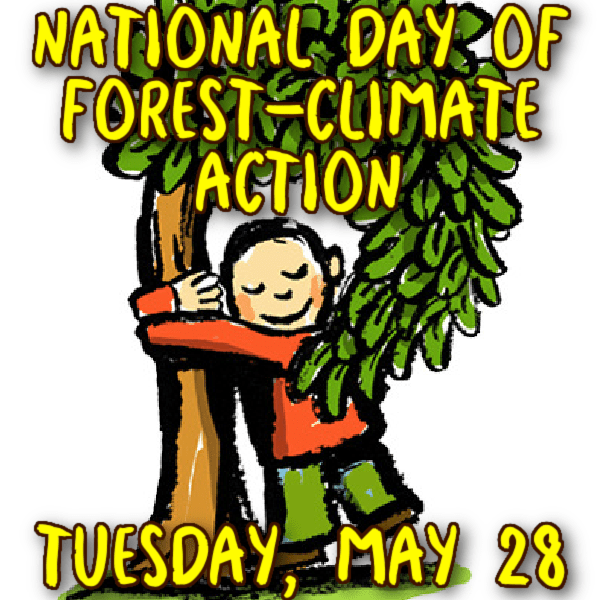
On episode 68 of the Green Root Podcast—the official podcast of Eco-Integrity Alliance—host Josh Schlossberg invites you to take part in the National Day of Forest-Climate Action on May 28 while giving his theory about why more environmental groups have yet to make the connection.
On Sunday, May 26 at 10 a.m. you’re invited on a guided hike through public forests threatened by the “Lower North-South Vegetation Management” outside Sedalia. The 3-mile, slow-to-moderately-paced hike will include identifying birds and rare, medicinal, and edible plants threatened by logging, along with evidence showing how this project will harm wildlife and the climate, all while increasing the risk of wildfire spreading to local communities.
This April for Earth Day, Eugene, Oregon-based Eco Advocates and Eco-Integrity Alliance have set up a billboard (photo here) on Interstate 5 inside Oregon’s capital city of Salem to pressure Sens. Jeff Merkley and Ron Wyden to stop wasting billions of taxpayer dollars cutting down our carbon-storing public forests under the phony guise of “wildfire fuel reduction.” Instead, the billboard urges Congress to fund Firewise home hardening programs that actually save homes from burning.
You’re invited to take part in the National Day of Forest-Climate Action on Tuesday, May 28 (the day after Memorial Day)! To sign up, email eia [at] eco-integrityalliance [dot] org!
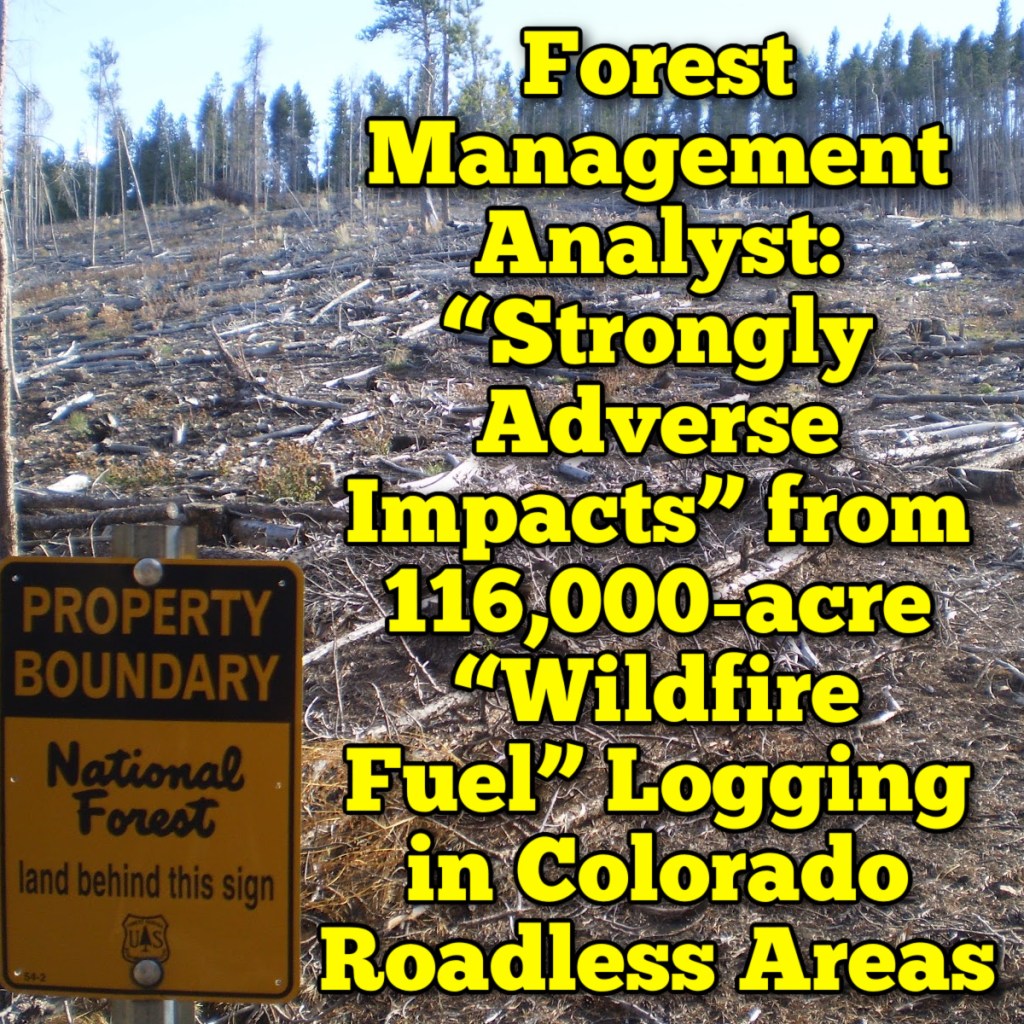
Rocky Smith, a Denver-based forest management analyst and consultant of more than 40 years, is voicing “strong concerns” with the “Lower North-South Vegetation Management” project, 116,600 acres of scientifically-contested “wildfire fuel reduction” logging in the Pike-San Isabel National Forest in the Front Range mountains of Jefferson and Douglas Counties, 18,500 acres within protected Colorado Roadless Areas.
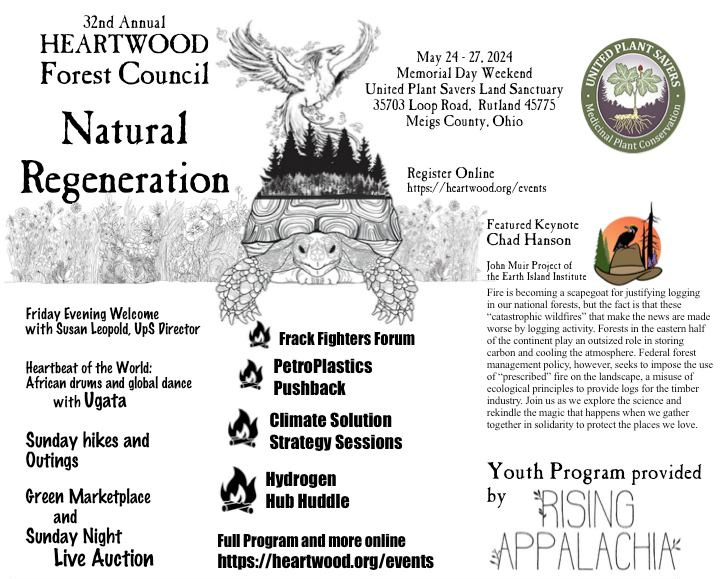
On episode 67 of the Green Root Podcast (the official podcast of Eco-Integrity Alliance), host Josh Schlossberg talks with Matt Peters, member of the Heartwood coordinating council, who covers the state of eastern U.S. forests and invites you to the 32nd annual Heartwood Forest Council on May 24-27 in Ohio.
May 24-27, 2024 Memorial Day Weekend United Plant Savers Land Sactuary 35703 Loop Road, Rutland 45775 Meigs County, Ohio
Since 1991, the annual Heartwood Forest Council has been a forum where activists gather to forge the future of the forest protection movement. Each year we meet over the Memorial Day Weekend in a different part of the Heartwood region, to bring regional focus on local issues. This year we are holding the 32nd annual Heartwood Forest Council in southeast Ohio at the United Plant Savers land sanctuary.


 Eco-Integrity Alliance