Logging equipment from a wildfire “fuel reduction” project caused the 33,000-acre Yellow Lake Fire, according to a U.S. Forest Service statement. The fire was the largest in the area since 2016, and the largest in the state since 2020.
While total suppression costs for the fire amounted to $20 million, the unnamed logging contractor was only fined $16,000, according to media reports.
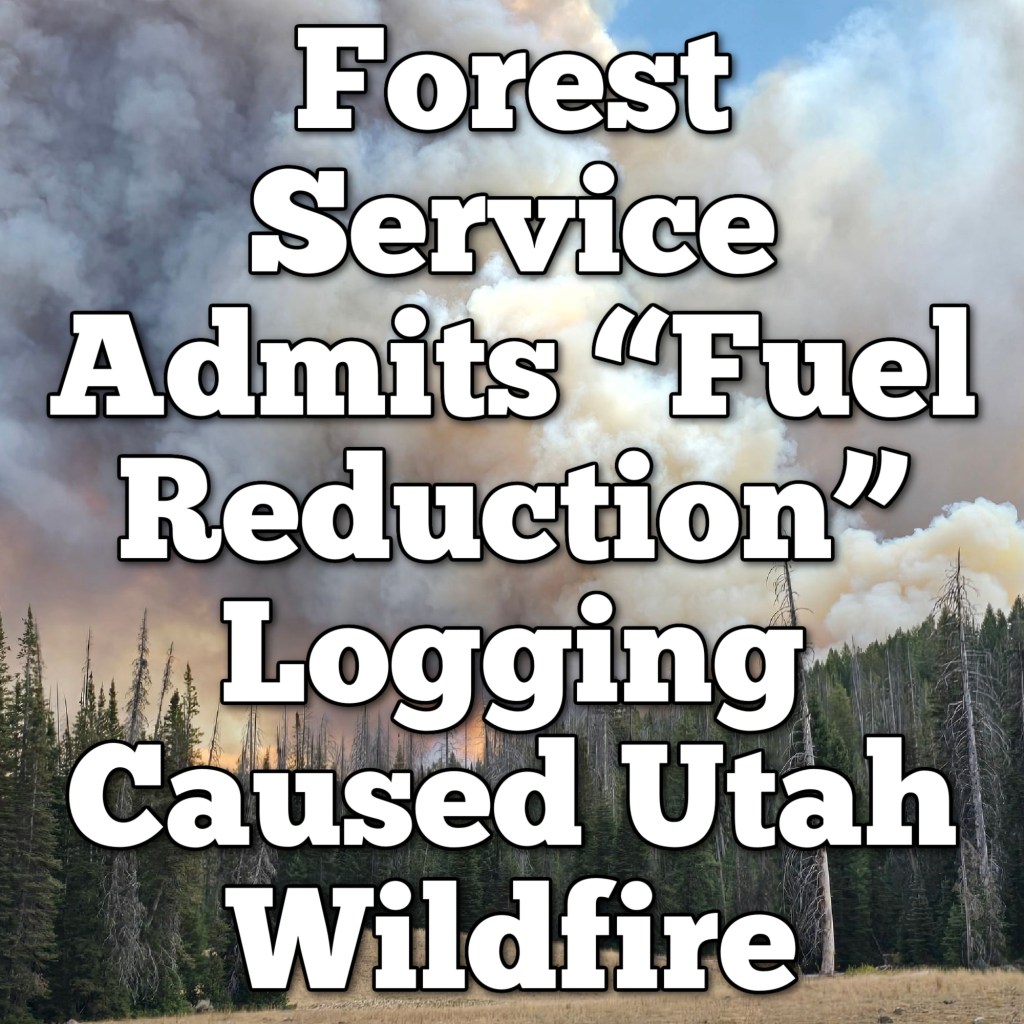
“This is one of countless timber sales across Utah and the West that the Forest Service has approved under the guise of ‘forest health’ and ‘fuel reduction,’” says Rebecca Diehl, Utah Advocate for Eco-Integrity Alliance. “The public has been sold a carefully crafted message that favors profits over people.”
Millions of acres of similar “fuel reduction” logging projects are ongoing or proposed across Western public lands, with a goal of forty five million acres over the next several years, according to the Forest Service.
This includes 900,368 acres of controversial and scientifically-contested “emergency action” logging and burning approved or proposed across fifteen National Forests in Idaho, Montana, California, Colorado, New Mexico, South Dakota, and Washington. Such projects bypass components of the National Environmental Policy Act (NEPA) and skirt legal challenges used by environmental advocates to pause or stop destructive projects.
Recent media reports suggest that the U.S. Forest Service is using these “wildfire mitigation” projects to reach projected levels of forest products (see “The Forest Service is using the threat of wildfires to meet timber targets” in Columbia Insight).
“The Forest Service’s complete disregard for real solutions to avoid home loss from wildfires, as we just witnessed in Los Angeles, is extremely concerning,” says Diehl, a Summit County resident of 13 years. “Funding for ‘fuel reduction’ logging should be reallocated to prevent or mitigate human caused fires, which includes home hardening, burying overhead power lines, closing unnecessary logging roads, establishing effective evacuation routes and smoke shelters, and building fire-resistant structures as more and more people move into zones that have experienced historical fires.”
Studies (both independent, peer reviewed from dozens of scientists and even from U.S. Forest Service) show that “thinning” heats up and dries out the forest microclimate, which can make fires start easier and burn more intensely—including igniting crown fires—while opening stands that let winds spread flames quicker to nearby communities, potentially overwhelming firefighters and evacuees.
While tens of billions of taxpayer dollars are spent on industrial fire suppression along with controversial, likely counterproductive, and potentially disastrous logging in the name of “community protection,” only a tiny fraction of funding has gone to home hardening and defensible space pruning 15-60 feet around structures, the only measures—along with patrolling and enforcement of human-caused ignitions—proven to protect communities from wildfire.
 Eco-Integrity Alliance