Since 2023, the U.S. Forest Service has approved or proposed 60,159 acres of controversial “emergency action” logging in Idaho National Forests, despite a vast and growing body of peer reviewed science refuting agency assertions that such “fuel reduction” protects communities from wildfire.
The projects–End of the World, Katkee Fuels, Limber Elk, Dixie-Comstock, and Twentymile–encompass the Nez Perce-Clearwater and Idaho Panhandle National Forests, and would involve construction or reconstruction of 220 miles of new logging roads. The Idaho Panhandle National Forest is the most heavily logged and roaded national forest in the entire National Forest system.
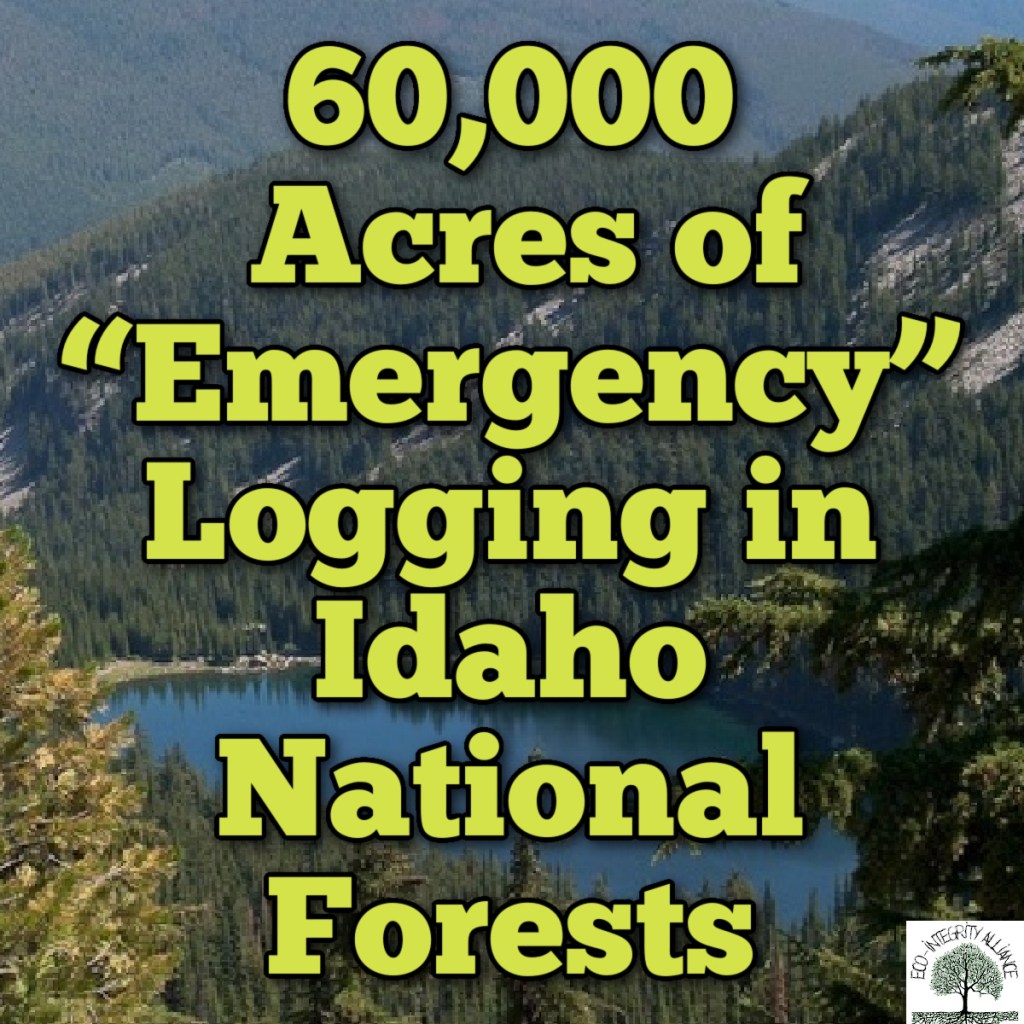
In specific, the “Emergency Designation” for the Katkee Fuels project does not provide the public with adequate information or mapping for threatened species habitat including: grizzly bears, lynx, whitebark pine, wolverine, native fish, protection of stream surveys and watershed assessments, old growth protection and recruitment. 11.9 miles of new roads are planned to access logging units, with over 1,200 acres in inventoried roadless areas.
“Contrary to the nature of an ‘emergency’ designation, the Katkee Fuels project is anticipated to take 10-15 years which is clearly based on providing a long-term supply of logs to the timber industry and not applicable to the unnecessary need to reduce ‘fuels,’” says Janet Torline of Kootenai Environmental Alliance. “This project should be dropped, and any available funds spent making homes and surroundings fire safe rather than destroying carbon fixing landscapes.”
900,368 acres of this “emergency action” logging and burning has been approved or proposed across fifteen National Forests in Idaho, Montana, California, Colorado, New Mexico, South Dakota, and Washington.
Studies (both independent, peer reviewed and from U.S. Forest Service) show that “thinning” heats up and dries out the forest microclimate, which can make fires start easier and burn more intensely—including igniting crown fires—while opening stands that let winds spread flames quicker to nearby communities, potentially overwhelming firefighters and evacuees.
While tens of billions of taxpayer dollars are spent on industrial fire suppression along with controversial, likely counterproductive, and potentially disastrous logging in the name of “community protection,” only a tiny fraction of funding has gone to home hardening and defensible space pruning 15-60 feet around structures, the only measures—along with patrolling and enforcement of human-caused ignitions—proven to protect communities from wildfire.
 Eco-Integrity Alliance