On Sunday, May 26 at 10 a.m. Eco-Integrity Alliance will host a guided hike through a section of the Pike National Forest outside Sedalia threatened by 116,600 acres of scientifically-contested “wildfire fuel reduction” logging. The easy to moderate hike is free and open to the public with an RSVP to eia [at] eco-integrityalliance [dot] org.
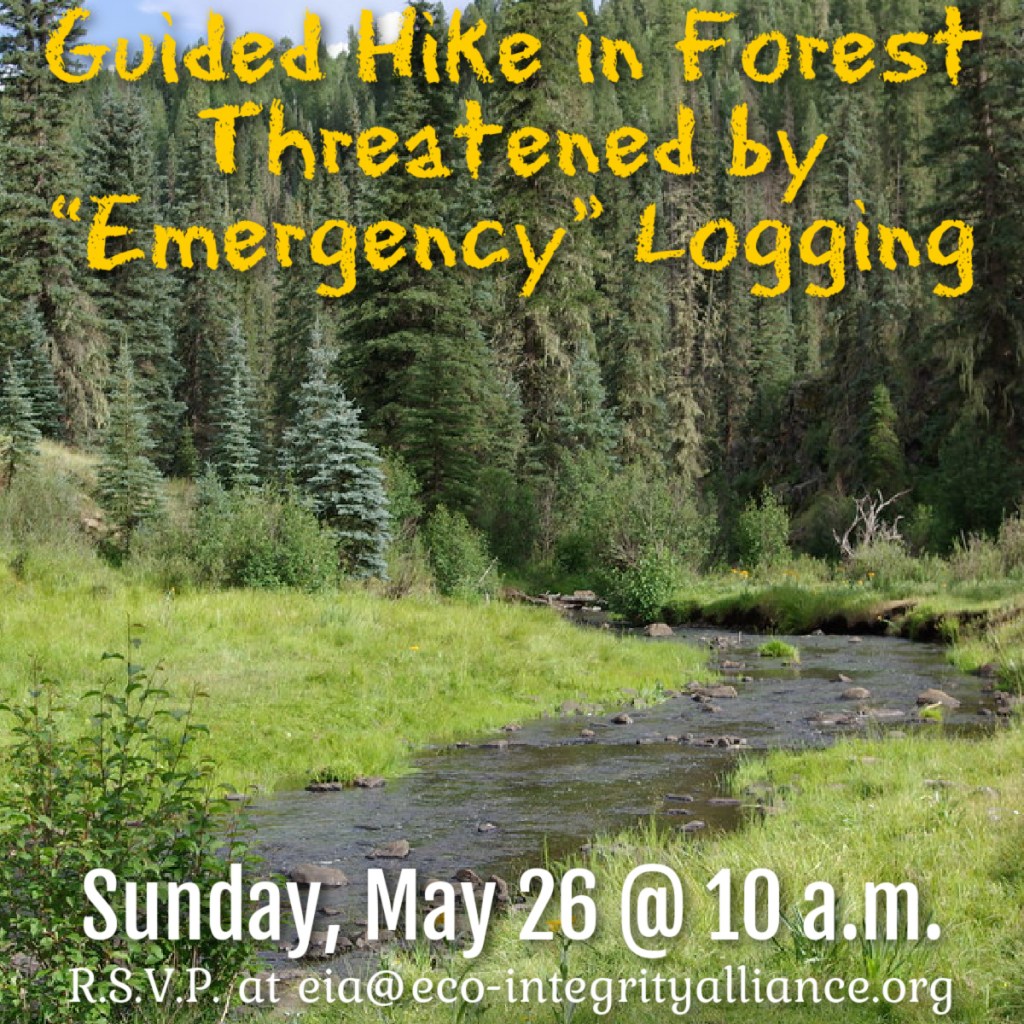
Naturalist Audrey Boag will identify birds and other wildlife, botanist/ecologist Gwen Kittel will point out rare, medicinal, and edible plants, and forest management analyst Rocky Smith and Eco-Integrity Alliance’s Josh Schlossberg will reveal evidence of how the U.S. Forest Service’s “Lower North-South Vegetation Management” project will harm forests, wildlife, and the climate, all while increasing the risk of wildfire spreading to local communities.
The “Lower North-South Vegetation Management” would involve clearcuts up to 40 acres within 87,813 acres of protected Colorado Roadless Areas, most in Denver’s drinking water supply area. Logging is being rushed through under a controversial “emergency action” which allows the Forest Service to bypass certain legal reviews and challenges from environmental advocates. Similar projects are in the works for millions of acres of Colorado’s carbon-storing forests and up to 45 million acres across the West.
Nine environmental groups, including Center for Biological Diversity, Environment Colorado, and Rocky Mountain Wild, signed onto comments calling for analysis on impacts of the “Lower North-South Vegetation Management” to wildlife listed under the Endangered Species Act, including the Mexican spotted owl, Pawnee montane skipper, Preble’s meadow jumping mouse, and threatened Canada lynx.
In February, twenty-one Colorado environmental groups—ranging from climate (350 Colorado) to wildlands protection (WildEarth Guardians) to wildlife (seven Audubon Society chapters) to watersheds (Colorado Headwaters)—sent a letter asking federal, state, county, and municipal elected officials to “engage with peer-reviewed studies from wildfire scientists” challenging millions of acres of so-called “wildfire fuel reduction” logging proposed for the state.
 Eco-Integrity Alliance